
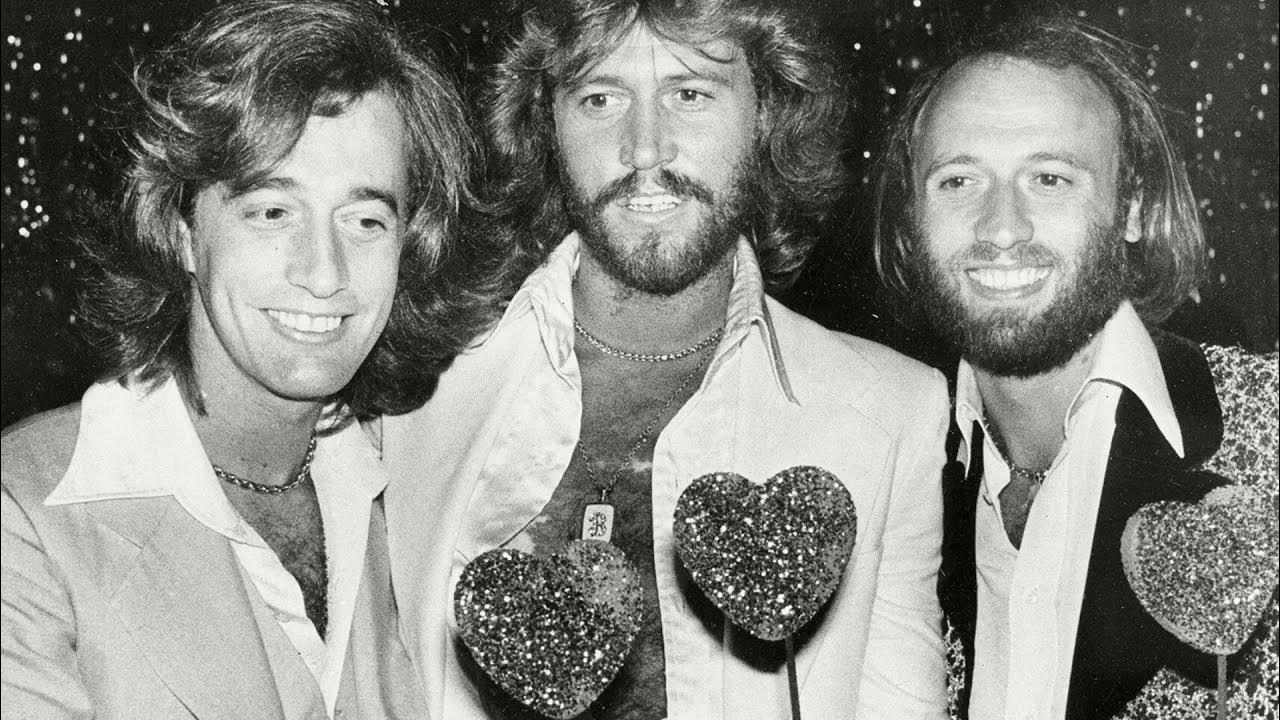
“Let There Be Love” is one of the Bee Gees’ most radiant early ballads—a song where innocence, yearning, and orchestral beauty rise together until love itself sounds less like romance than a gentle act of blessing.
One of the most important facts to place right at the beginning is that “Let There Be Love” was first released in September 1968 as the opening track on the Bee Gees’ album Idea. It was written by Barry, Robin, and Maurice Gibb, and although it was not a major international single at the time of the album’s release, it later received a separate single issue in the Netherlands in 1970, where it reached No. 14. That matters because the song was never one of the gigantic worldwide Bee Gees smashes, yet it was clearly strong enough to have a life beyond the album and to linger in the group’s catalog as something more than a forgotten deep cut.
That album context is essential. Idea was the Bee Gees’ second album of 1968, arriving in the remarkable early period when the brothers were still defining themselves as masters of ornate, emotionally rich pop rather than the disco emperors they would later become. The official Bee Gees discography still places “Let There Be Love” prominently at the head of the track list, and that placement tells its own story. This was not a minor song tucked away near the end. It was chosen to open the record, to set its emotional weather, to invite the listener into a world of tenderness, melody, and slightly dreamlike melancholy.
The song’s title immediately gives away its emotional ambition. “Let There Be Love” is phrased almost like a prayer or a benediction. It echoes the cadence of sacred language, not in a doctrinal way, but in a way that gives the song unusual gravity. This is not love as flirtation, not love as clever pop banter, not love as wounded irony. It is love as invocation. The title suggests a wish for the world itself to be softened, illuminated, made more humane through tenderness. That is one reason the song feels so luminous. The Bee Gees were always capable of heartbreak, but here they reach toward something gentler and more idealistic.
Musically, “Let There Be Love” belongs to that especially beautiful late-1960s Bee Gees style where pop songcraft meets chamber-like elegance. Song historians describing the 1968 recording note the bright guitars, piano, and Bill Shepherd’s arrangement with harps and violins, all of which give the track its delicacy and slightly precious shimmer. That sound matters because it helps explain why the song feels so airy and elevated. It does not stomp or plead. It glides. Even the sadness inside it is wrapped in light.
And that is the deeper charm of “Let There Be Love.” It is a love song, yes, but it sounds less like a confession to one person than like a hope offered outward. The Bee Gees, especially in this era, were masters of giving personal emotion a strangely public, almost ceremonial beauty. Here they seem to suggest that love is not only a private matter of lovers and longing, but a condition the world needs. That is what gives the song its purity. It does not reduce love to possession or desire alone. It imagines love as atmosphere—something the heart asks for the way one asks for light after darkness.
Within the Bee Gees’ catalog, that makes the song especially moving. It does not dominate their legacy the way “Massachusetts,” “I Started a Joke,” or the later disco classics do. But precisely because it lives a little outside the loudest spotlight, it preserves a special kind of grace. It still feels like a discovery. The listener who comes to it now hears not overfamiliar legend, but the Bee Gees in one of their gentlest early moods—ambitious, melodic, and full of that aching refinement that made their late-1960s work so distinctive. It is also telling that the song later resurfaced on compilations such as Best of Bee Gees, Volume 2, which suggests it retained a quiet importance in how the catalog was curated.
So “Let There Be Love” deserves to be heard as one of the loveliest hidden jewels of the Bee Gees’ early period: a 1968 opening track from Idea, written by all three Gibb brothers, and later a Top 20 Dutch hit in single form. But beyond the facts lies the real reason it lingers. It carries that old Bee Gees magic of turning softness into something unforgettable. It does not shout for attention. It simply opens like a blessing—and once it does, the heart understands it immediately.