
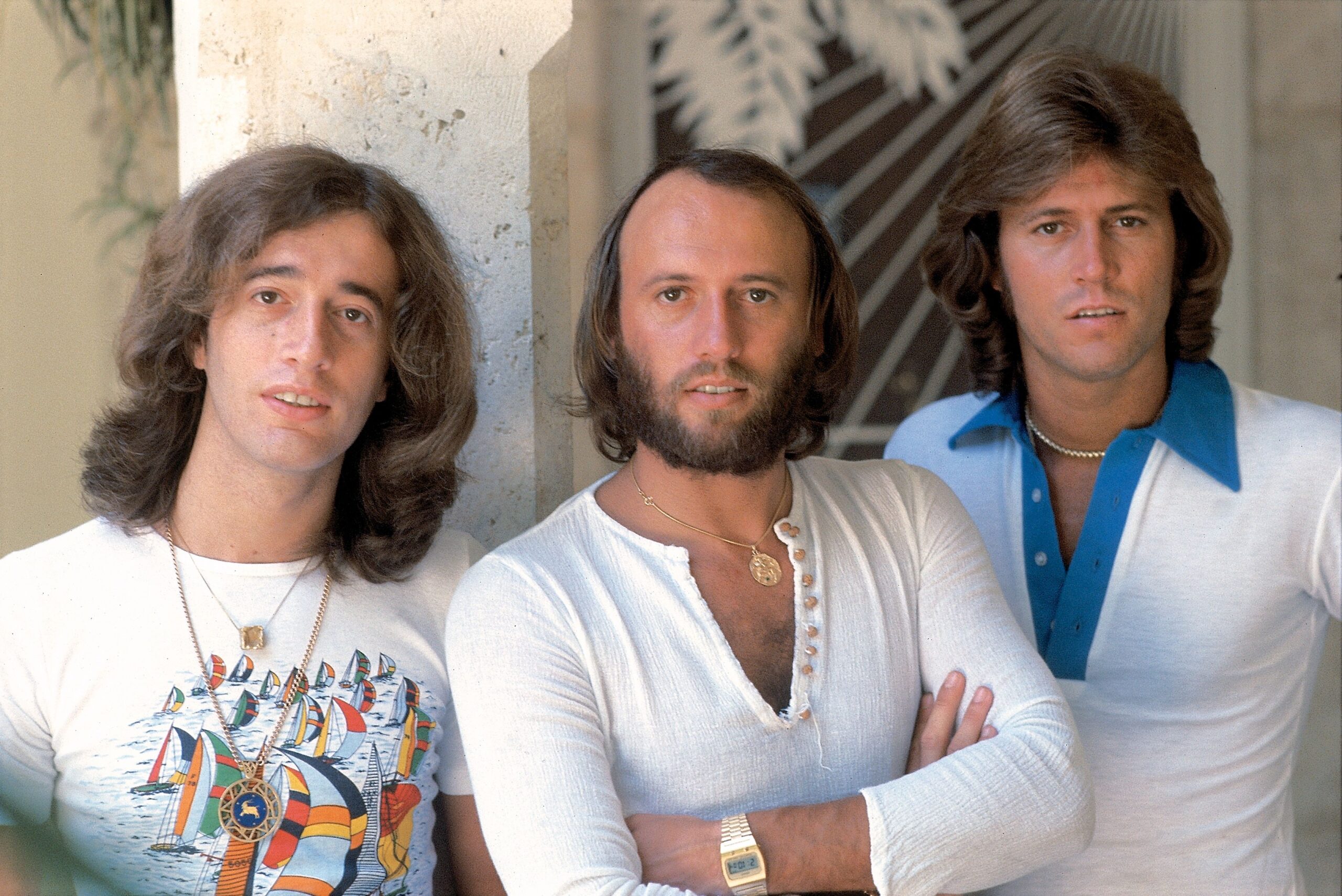
“Man For All Seasons” is the Bee Gees’ quiet reassurance after a rupture—a small, graceful promise that love can steady you through every kind of weather, even when a band (or a heart) is just learning how to be whole again.
In the Bee Gees story, “Man For All Seasons” matters less for chart glory than for where it sits in time. It was released on November 6, 1970 as the B-side to “Lonely Days”—the single that announced the group’s reunion in the most public way possible. And that timing is everything: 2 Years On (released November 1970) was the album that marked Robin Gibb’s return after the Odessa-era split, restoring the classic trio of Barry, Robin, and Maurice Gibb.
The headline numbers belong to “Lonely Days,” of course—No. 3 on the Billboard Hot 100 (and a major U.K. showing at No. 33)—while 2 Years On itself reached No. 32 on the U.S. album chart. But that’s precisely why “Man For All Seasons” feels like a treasured deep cut: it didn’t need to “win” the spotlight. It lived in the shadow of a hit single, like a second letter tucked into the same envelope—more personal, more inward.
On the album, “Man For All Seasons” appears as track 3, credited to all three brothers (Barry Gibb, Robin Gibb, Maurice Gibb). It was recorded at IBC Studios in London, with “Lonely Days” famously cut at the reunion session dated August 21, 1970. Even if you didn’t know those dates, you can hear the emotional subtext: this is music made by people re-learning how to blend—how to step on the same emotional floorboards without making them creak.
And that’s the song’s hidden story. 2 Years On was a “back together” album—creative unity restored, but still tender at the seams. Within that context, “Man For All Seasons” plays like a vow of steadiness. The title itself is almost old-fashioned in its decency: a “man for all seasons” is someone reliable, someone who doesn’t vanish when conditions change. Not a fair-weather lover. Not a fair-weather friend. It’s the kind of phrase you might have heard from an older generation, spoken without drama, as if loyalty were simply part of good manners.
Musically, it belongs to that early-’70s Bee Gees palette—melody first, harmony as the emotional engine, and orchestration used not for bombast but for shading. Credits for the 2 Years On sessions commonly note Bill Shepherd as arranger/conductor, a name inseparable from the Bee Gees’ most elegant period, and Robert Stigwood and the Bee Gees as producers. The result is a track that doesn’t kick down the door; it opens it gently and invites you in.
That gentleness is the meaning. “Man For All Seasons” isn’t the desperate loneliness of “Lonely Days.” It’s what comes after loneliness has said its piece: the desire to be trusted again, to be chosen again, to be the kind of person who stays. It carries the emotional logic of reunion—romantic on the surface, but quietly resonant if you hear it as a band’s self-portrait. After a split, the real work isn’t the big handshake. It’s the everyday proof. The “all seasons” part.
So no, “Man For All Seasons” didn’t have a separate chart peak to pin on a timeline—its identity was as the B-side companion and the album track, living just off-center from the spotlight. But that’s exactly why it can feel so intimate now. In the Bee Gees’ long, shape-shifting career—full of reinventions, eras, and masks—this song is a reminder of something simpler: three brothers, newly reunited, singing like they mean to stay that way.
If you return to “Man For All Seasons” today, it doesn’t feel like a “minor” Bee Gees recording. It feels like a quiet cornerstone: loyalty described not as a grand romantic myth, but as a daily, human offering—steady hands, steady voice, steady heart—through every season that comes.