
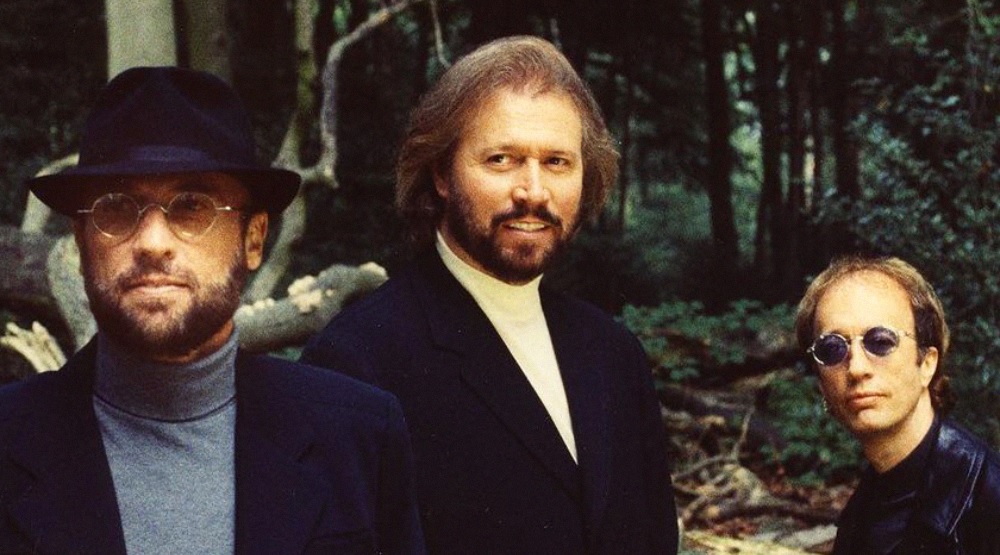
“Smoke And Mirrors” is the Bee Gees’ late-career confession that some of life’s safest-looking memories are fragile illusions—beautiful, comforting, and heartbreakingly temporary.
By the time the Bee Gees reached “Smoke And Mirrors,” they weren’t writing to win an argument with the charts—they were writing to make sense of time. The song closes their album Still Waters, a record released March 10, 1997 in the UK (and May 6, 1997 in the US), recorded largely between January and August 1996. That matters, because Still Waters was widely heard as a genuine late-’90s resurgence: it peaked at No. 2 on the UK Albums Chart and No. 11 in the United States, their strongest album showing in many years. In other words, the world was listening again—yet the Bee Gees chose to end the album not with triumph, but with a quiet, uneasy meditation: “Smoke And Mirrors” (running 5:00), with lead vocals credited to Robin and Barry Gibb.
It’s telling, too, what “Smoke And Mirrors” is not. It was not released as a featured single, so it doesn’t have a neat “debut peak” to recite. The album’s public face was carried by singles like “Alone” (a worldwide hit that reached No. 5 in the UK and No. 28 in the US) and follow-ups such as “I Could Not Love You More” and “Still Waters (Run Deep)” which also reached the UK Top 20. So “Smoke And Mirrors” lives where the most personal Bee Gees songs often live: at the end of the record, waiting for the listener who stays after the “hits” have spoken.
The credits underline its intimacy. Like most of the album, “Smoke And Mirrors” is written by Barry, Robin, and Maurice Gibb. But what makes it feel especially “Robin”—in that searching, slightly haunted Bee Gees way—is the song’s emotional posture: it doesn’t chase romance like a prize; it questions the very idea of safety, permanence, and the stories we tell ourselves to get through the night.
One of the most illuminating pieces of commentary on the song comes from Joseph Brennan’s long-running Bee Gees sessionography, which describes “Smoke And Mirrors” as an “ambitious composition” assembled from multiple melodic parts, with an “existentialist” tilt—touching on the “golden summers of childhood,” the longing to feel safe from harm, and the way that sense of safety can fade. That’s a devastating lens, because it reframes the title phrase. “Smoke and mirrors” usually implies deception—something staged to fool the eye. Yet the Bee Gees make it feel subtler and sadder: not always a lie told by someone else, but sometimes a comfort we build for ourselves. A little theater of reassurance. A fragile spell we hope will hold.
And if you listen with that in mind, the song becomes a kind of late-night room you recognize immediately. Not the bright room of early love, where certainty feels natural and tomorrow feels guaranteed. This is the room where adulthood has arrived—quietly, insistently—with its losses, its compromises, its news you never wanted, its gradual understanding that time is not sentimental. The Bee Gees don’t state these truths like philosophers. They sing them the way they always have: as melody first, feeling second, realization last—so the insight doesn’t land as a lecture, but as a soft ache you can’t quite shake.
There’s also a deeper poignancy in where “Smoke And Mirrors” sits in the Bee Gees timeline. Still Waters was their penultimate studio album, a late chapter made with a wide circle of high-level collaborators and producers, but still unmistakably the Brothers Gibb at the core. When they end that record with “Smoke And Mirrors,” it feels like they’re choosing honesty over sparkle—like they want the last word of the album to be something human, not merely impressive.
So the meaning of “Smoke And Mirrors” lingers long after the track fades: it’s about illusion, yes—but also about tenderness. About the way we look back on certain “safe” times and realize they were never as solid as we believed. About how memory can be both a shelter and a trick of the light. And about the strange courage it takes to admit that even the most beautiful stories—especially the beautiful ones—may have been held together by nothing more than breath, hope, and the desperate wish that the night would pass without changing everything.