
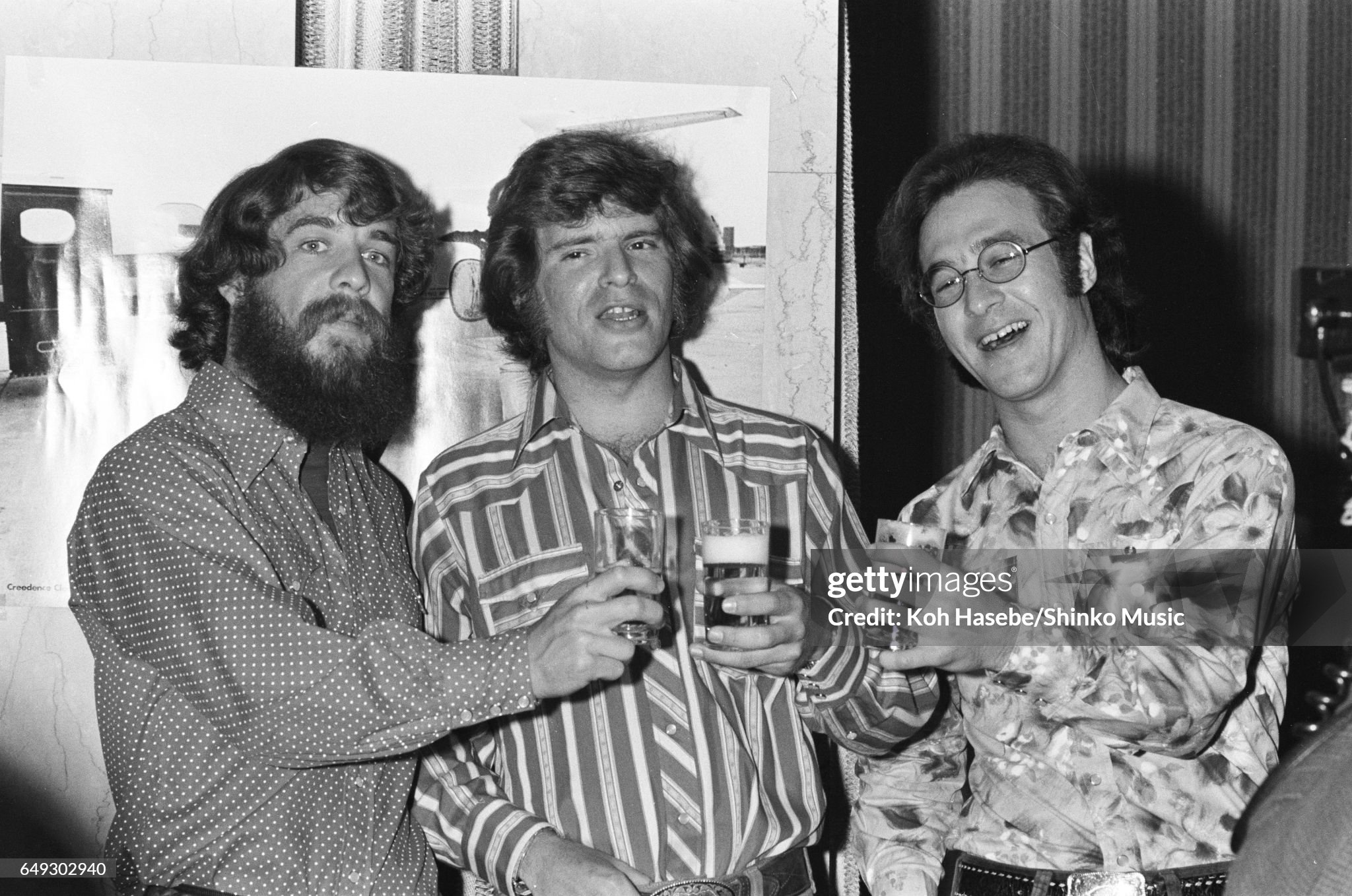
“The Night Time Is the Right Time” is Creedence Clearwater Revival reaching back to the raw church-and-juke-joint soul of R&B—then driving it straight through the swamp, turning late-night desire into a roaring, communal release.
If you want the clearest “where and when” before the feeling takes over: Creedence Clearwater Revival recorded “The Night Time Is the Right Time” as the closing track of their third album Green River, released August 7, 1969 on Fantasy Records, produced by John Fogerty.
And if you want the most meaningful chart landmark of that era: Green River became CCR’s first No. 1 album on the Billboard 200, reaching the top spot on October 4, 1969—a moment when their run of hit singles finally crystallized into a full-album triumph.
This song itself was not rolled out as a charting single; its power is album-deep, the kind of track you arrive at after the hits have done their work—like walking past the bright front room and discovering the real party in the kitchen.
The song’s lineage is older, and that history is part of why it lands with such authority. “Night Time Is the Right Time” (also known as “The Right Time”) was recorded by Nappy Brown in 1957 and famously popularized by Ray Charles soon after, becoming a signature slice of call-and-response R&B heat.
Authorship on this tune is a classic blues-and-R&B tangle—credits shifting as the song evolved through the years—but one widely documented set of writers includes Roosevelt Sykes, Nappy Brown, Lew Herman, and Ozzie Cadena.
What matters musically is that CCR didn’t treat it like a museum piece. They treated it like something still alive—something that could sweat, shout, and testify.
That choice also fits the Creedence method in 1969. Even while they were writing era-defining originals, they kept folding classic American music into their albums—R&B, early rock ’n’ roll, the stuff that once came through the radio like a promise. Green River explicitly continues that tradition, placing this Ray Charles–associated burner alongside Fogerty originals as if to say: the past isn’t behind us; it’s the fuel.
And listen to how the song functions as a finale. After “Bad Moon Rising” and “Green River” have already etched themselves into the listener’s mind, “The Night Time Is the Right Time” feels like the band kicking over the last chair and letting the night run its course. It’s about the night—sure—but more deeply, it’s about permission: permission to want, to move, to answer back. CCR’s arrangement leans into the gospel mechanics of the original idea—call and response, the rhythm of a room full of voices—yet their tone is unmistakably theirs: lean, gritty, forward-driving, like a bar band with a revival meeting in its bloodstream.
There’s a special kind of nostalgia here, because the song isn’t “nostalgic” in the soft-focus sense. It’s nostalgic the way an old venue is nostalgic—the floorboards remember the weight of a hundred dancing feet. CCR’s version makes you feel how a great R&B standard could travel across decades and still work, because the craving underneath it hasn’t changed. Night still falls. Loneliness still knocks. Desire still insists on being heard.
Even the small discographic details underline its role as a late-night staple rather than a radio headline: many listings note the track at 3:09, quick enough to hit like a shot of something strong, long enough to leave your pulse up.
So what does “The Night Time Is the Right Time” mean when Creedence Clearwater Revival sings it in 1969, at the height of a turbulent American summer turning into fall? It means the band understood something fundamental: that rock ’n’ roll doesn’t replace rhythm and blues—it extends it. It means John Fogerty wasn’t only a songwriter with a gift for vivid American snapshots; he was also a believer in the older altar where the music began: the groove, the shout, the shared release of voices meeting in time.
And maybe that’s why this track still feels so satisfying at the end of Green River—an album that reached No. 1 not by chasing trends, but by sounding like a band that knew exactly what it loved.