
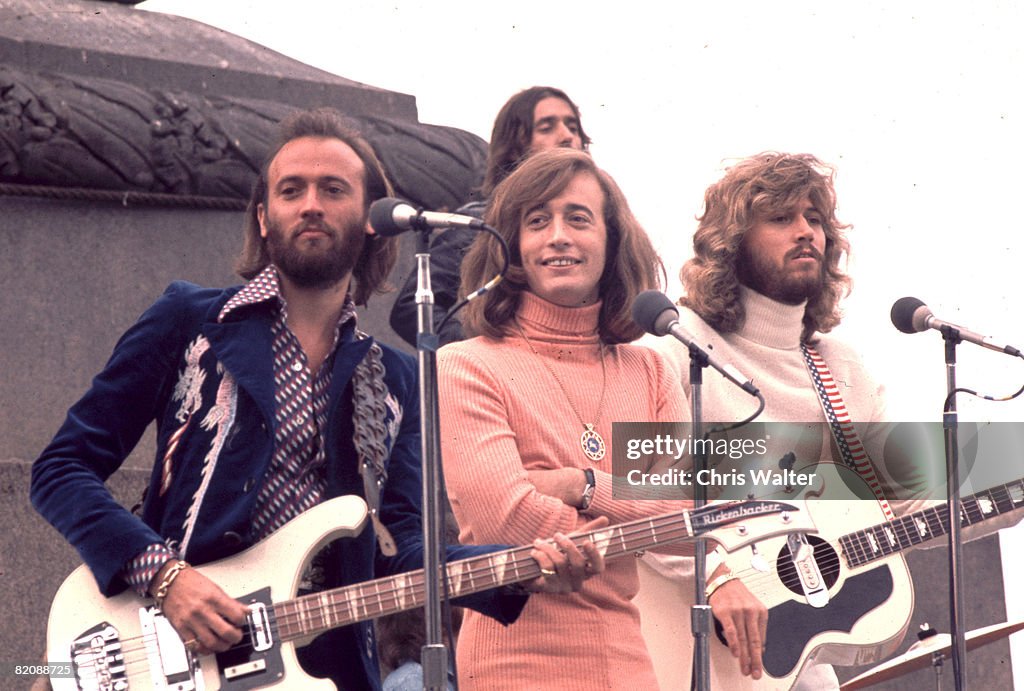
Reaching Out shows the Bee Gees in a quieter, deeper light: not chasing the spotlight, but searching for human closeness, dignity, and hope through harmonies that feel lived-in and profoundly sincere.
There are songs that dominate the radio, and then there are songs that stay with you for more private reasons. Reaching Out belongs to the second kind. It is not one of the towering chart monuments most listeners immediately name when they think of the Bee Gees. It did not arrive with the commercial thunder of Stayin’ Alive, How Deep Is Your Love, or You Win Again. In fact, Reaching Out was not a major standalone hit single for the group in either the United States or the United Kingdom, which means it did not carve out a notable peak on the Billboard Hot 100 or the UK Singles Chart under the Bee Gees name. And yet that very absence from the weekly race is part of what makes the song so moving now. It asks to be heard not as a product of hype, but as a piece of feeling.
That is often where the real story of the Bee Gees begins. Barry, Robin, and Maurice Gibb were never only chart men, never only hitmakers in white suits under a disco ball. Beneath the fame was a lifelong instinct for melody, ache, and emotional architecture. Reaching Out reminds us of that with unusual grace. The title alone carries the whole emotional motion of the song: a hand extended across silence, distance, regret, or even misunderstanding. It is a title about need, but not weakness. It suggests the courage it takes to bridge a space that pride might prefer to leave untouched.
The beauty of Reaching Out lies in how naturally it fits the brothers’ mature songwriting voice. By the time the Bee Gees entered their later creative years, they had already endured the dizzying rise of worldwide adoration, the backlash that unfairly tried to reduce them to a single era, and the hard personal weather that always seems to follow public myth. Songs from this period often carried more reflection in them. They were less interested in youthful display and more interested in what remains after the noise fades: loyalty, longing, memory, endurance, and the stubborn human wish to be understood. Reaching Out lives in that territory.
Musically, the song speaks in the language the Bee Gees always understood best: atmosphere, emotional lift, and voices that hold both fragility and strength at once. The arrangement does not need to overwhelm you. It draws you inward. The harmonies do the deeper work, and that is where the soul of the performance resides. Barry’s sense of melodic control, Robin’s haunted emotional color, and Maurice’s grounding presence create the kind of blend that no other group could quite imitate. Even in lesser-known recordings, that family sound remains unmistakable. It is not just polished; it is intimate. It feels as if the song is being carried by memory as much as by melody.
The story behind Reaching Out is meaningful precisely because it belongs to a period of the Bee Gees story that casual listeners sometimes miss. After the colossal shadow of Saturday Night Fever and the triumph of Spirits Having Flown, the brothers continued to write with remarkable discipline and emotional intelligence. The public conversation often lagged behind the music. Many people kept returning to the hits they already knew, while the Gibbs kept adding quieter chapters to their catalog. Reaching Out stands as one of those chapters: not the loud declaration, but the letter folded carefully and kept in a drawer.
Lyrically and emotionally, the song can be heard as a meditation on connection under pressure. It speaks to those moments when love is not glamorous and communication is not easy, yet the need to cross the divide remains. That is why the song carries such lasting resonance. It is not built on youthful fantasy. It is built on the recognition that reaching out is often what people do when they have already been hurt, already lost time, already learned how precious understanding really is. In that sense, it is a very adult song, and the Bee Gees were masters of that kind of emotional shading.
There is also something quietly defiant in the way Reaching Out exists within the Bee Gees legacy. It reminds us that not every important song comes with a gold-plated chart story. Some songs endure because they reveal character. This one reveals tenderness without sentimentality. It reveals vulnerability without collapse. It reveals the brothers not as cultural symbols, but as craftsmen still listening for the truest emotional note.
For longtime admirers of the Bee Gees, Reaching Out can feel like a rediscovery. For newer listeners, it opens a door into the part of their catalog that deserves more attention: the later, wiser, more reflective work that carried the same songwriting gift with a different kind of gravity. If the great hits gave the world its soundtrack for dancing, songs like Reaching Out gave it something else just as valuable: a soundtrack for remembering, for forgiving, and for trying one more time to close the distance between one heart and another.
And perhaps that is the lasting meaning of Reaching Out. It is the sound of the Bee Gees refusing to become a museum piece. It is the sound of three brothers still searching, still shaping emotion into melody, still believing that music can travel where ordinary language cannot. Long after chart statistics have faded into trivia, that is what remains. A song reaching forward. A listener reaching back. And somewhere in between, the unmistakable humanity of the Bee Gees.