
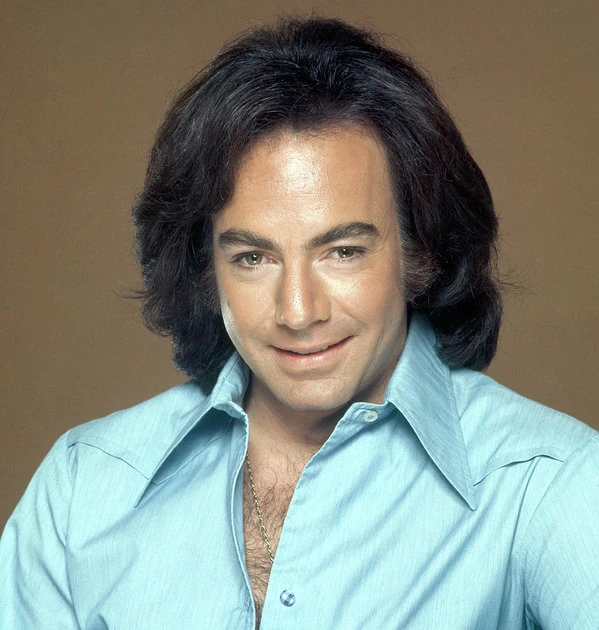
“Long Gone” is the sound of a man walking out before the room can close in—restless, proud, and already half a memory by the time you turn to look.
Before there was the communal roar of “Sweet Caroline,” before Neil Diamond became a name you could practically hear in the way a crowd sings, there was the leaner, tougher Diamond of 1969—still close to the Brill Building grit, still writing like someone who’d rather burn a bridge than stand politely at its edge. “Long Gone” belongs to that moment. It is the fifth track on his fourth studio album, Brother Love’s Travelling Salvation Show, released April 4, 1969 on Uni. The song runs 3:18, compact and purposeful—built less like a grand statement and more like a quick exit with the door already swinging shut behind him.
Because you value “ranking at launch,” here is the clearest, verifiable chart picture—not for the song as a standalone single (it wasn’t), but for the album that carried it into the world. Brother Love’s Travelling Salvation Show peaked at No. 82 on the US Billboard 200 and later received a Gold certification from the RIAA. A chart-run archive also shows the album debuting on the Billboard 200 dated May 17, 1969, spending 12 weeks on the chart, and peaking at No. 82. So “Long Gone” arrives not as a radio headline, but as part of a record that had real traction—quietly successful, and soon to be overshadowed by something bigger.
That “something bigger” is part of the album’s own backstory, and it’s essential context for the mood around “Long Gone.” Wikipedia notes that the title track became a No. 22 hit, and—four months later—Diamond released “Sweet Caroline,” which reached No. 4 and was popular enough that it was added to later pressings of the album (even prompting a reissue sleeve emphasizing “Sweet Caroline”). In other words, this album is a snapshot of a moving target: Diamond’s career accelerating so quickly that the record itself had to be revised in real time to keep up.
So where does “Long Gone” fit emotionally?
It feels like the opposite of “Sweet Caroline’s” open-armed singalong. It’s smaller, sharper—more streetlight than stadium light. The title alone carries a particular kind of sting: not “gone,” but long gone—as if distance isn’t just physical, it’s already emotional, already decided. The song’s posture suggests someone who’s made leaving into a habit, maybe even a form of self-protection. There’s a bluesy impatience to it: the sense that explaining yourself is pointless, because the only honest thing you can do is move.
And that’s where the lyric’s deeper meaning lives—not in any one clever phrase, but in the emotional architecture. “Long Gone” isn’t merely about departing; it’s about the moment you realize you’ve been half-departed for a while. The relationship—romantic or otherwise—has shifted into something you can’t recognize, and rather than bargain with it, the narrator chooses dignity through motion. Diamond’s early writing often balances toughness with vulnerability, and here you can feel both: the bravado of “you won’t catch me,” and the quieter truth underneath it—“I’ve been hurt enough to learn the quickest way out.”
If you listen with the album in mind, that restlessness makes even more sense. The record was assembled quickly enough that even later reviews remark on the “speed” of its making, and it was recorded during 1968–69 with a rotating production team including Tom Catalano, Chips Moman, Tommy Cogbill, and Diamond himself. That atmosphere—busy, urgent, forward-leaning—matches the song’s personality. “Long Gone” doesn’t linger. It doesn’t settle. It keeps one foot pointed toward the next chapter.
And perhaps that’s why it still resonates. Many years on, “Long Gone” can feel like an old postcard from an earlier version of adulthood—when leaving was sometimes the only way to stay intact, when you didn’t have the language for your loneliness so you disguised it as speed. It’s not the Neil Diamond who invites everyone to sing. It’s the Neil Diamond who slips out the side door—coat already on—carrying his heart like something fragile he refuses to hand over again.