
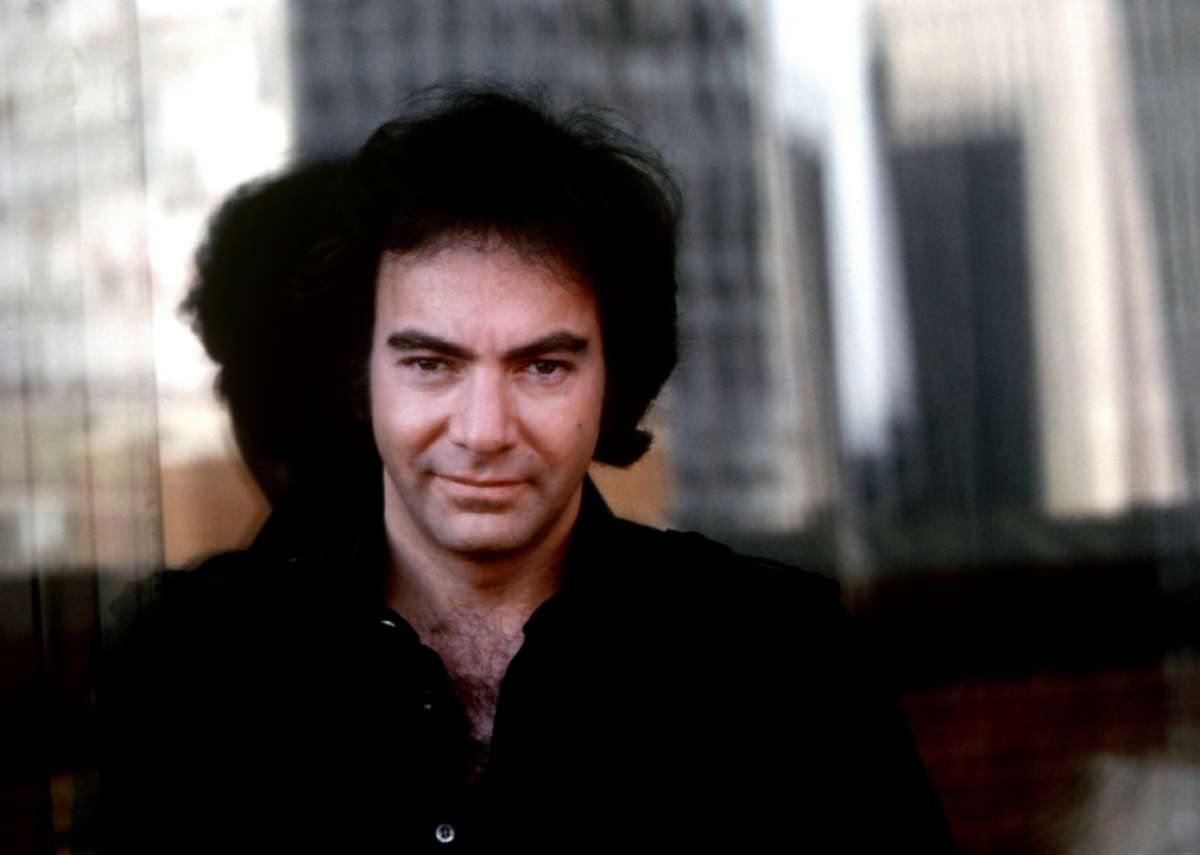
“Melody Road” is Neil Diamond’s late-life map back to himself—proof that even after decades of fame, the truest journey is still the one that leads you home to your own song.
“Melody Road” opens (and then, in a brief “Melody Road (Reprise)”, gently closes) Neil Diamond’s 32nd studio album Melody Road, released October 21, 2014—his first collection of newly recorded original songs since Home Before Dark in 2008. That date matters because it frames the mood: this is not a young man’s “next chapter,” but an elder songwriter’s return to the workbench, choosing craft over spectacle. The album debuted at No. 3 on the Billboard 200 (about 78,000 copies in its first week), a striking late-career showing that said, quietly but unmistakably: the audience still wanted the voice—and the stories—when they were honest.
There’s also a behind-the-scenes shift that gives “Melody Road” its particular glow. After roughly 40 years of solo albums associated with Columbia, Diamond signed with Capitol Records in 2014, making this record feel like a symbolic change of scenery—same traveler, new road signs. And he didn’t make that turn alone: the album was produced by Don Was and Jacknife Lee, an intriguing pairing that blends classic musical warmth with modern texture. If you listen closely, you can hear that intention—songs that still breathe like Diamond, but carry a fresher air around the edges.
As for “ranking at launch” beyond the U.S.: Melody Road reached No. 24 in Germany (chart entry October 31, 2014)—a reminder that Diamond’s songwriting remained an exportable language, even in an era that often treats veteran pop as nostalgia rather than current life. (The album’s success story is also documented across multiple markets in the album’s chart listings.)
Now—what is “Melody Road” about?
It’s about the strange truth that a musician’s “home” is not always a house or a city. Sometimes it’s a sequence of chords. Sometimes it’s the private corridor inside the mind where songs first arrive—half-formed, humming, asking to be finished. The title itself feels like a confession: my life has been music, and music has been my life’s road. There is tenderness in that, but also fatigue. A road is beautiful, yes—but it implies distance, time, leaving, returning, leaving again. It implies that the singer has spent years moving forward while carrying old versions of himself in the suitcase.
That’s why “Melody Road” works especially well as track 1. The opening track has a special job: it tells the listener what kind of truth will be allowed in the room. Here, Diamond doesn’t arrive with a crowd-chant hook. He arrives with the feel of someone stepping back into a familiar lane at dusk—still sure of the route, but seeing the scenery differently now. The album’s very structure—beginning with “Melody Road” and ending with “Melody Road (Reprise)”—suggests a circular journey rather than a straight line. Not “onward to the next thing,” but “let’s return to what matters and see what it means now.”
The story behind the album’s rollout deepens that sense of intention. In early September 2014, Diamond previewed tracks at a listening event at Capitol Studios—an unusually intimate, almost old-fashioned way to introduce new work in the streaming age. The coverage emphasized orchestration that still kept the “rustic” qualities of his prior Rubin-era direction (12 Songs, Home Before Dark), but broadened the palette again—music that feels seasoned rather than simply stripped.
And that’s the emotional trick Neil Diamond pulls so well on “Melody Road”: he sings like someone who has already seen the cost of fame, and is no longer impressed by the glitter of it. The romance in this song isn’t only romantic-love; it’s craft-love. The love of the tune you can’t stop chasing. The love of the line that won’t leave you alone until you get it right. The love of the stage—and the quiet dread of the hotel room after the stage. “Melody Road” feels like it holds both at once: gratitude and weariness, pride and longing, the bright memory of earlier triumphs and the sobering knowledge of how quickly applause dissolves into silence.
It’s also worth noting what “Melody Road” is not: it was not positioned as the album’s radio spearhead. The album’s first single was “Something Blue,” and the promotional focus leaned toward other tracks for video and spotlight. That leaves the title track in a special place—less “product,” more “prologue.” A song you find the way you find a meaningful street: not because everyone points at it, but because you eventually follow your own instincts there.
In the end, “Melody Road” is Diamond doing what he has always done best—turning private emotion into public melody—but with an older man’s patience. It doesn’t demand you celebrate. It invites you to remember: the first time a song felt like it belonged to you, the first time a voice on the radio made the world feel survivable, the first time you realized that a “road” can be lonely… and still be worth traveling, if it leads you back to the part of yourself that can still sing.