
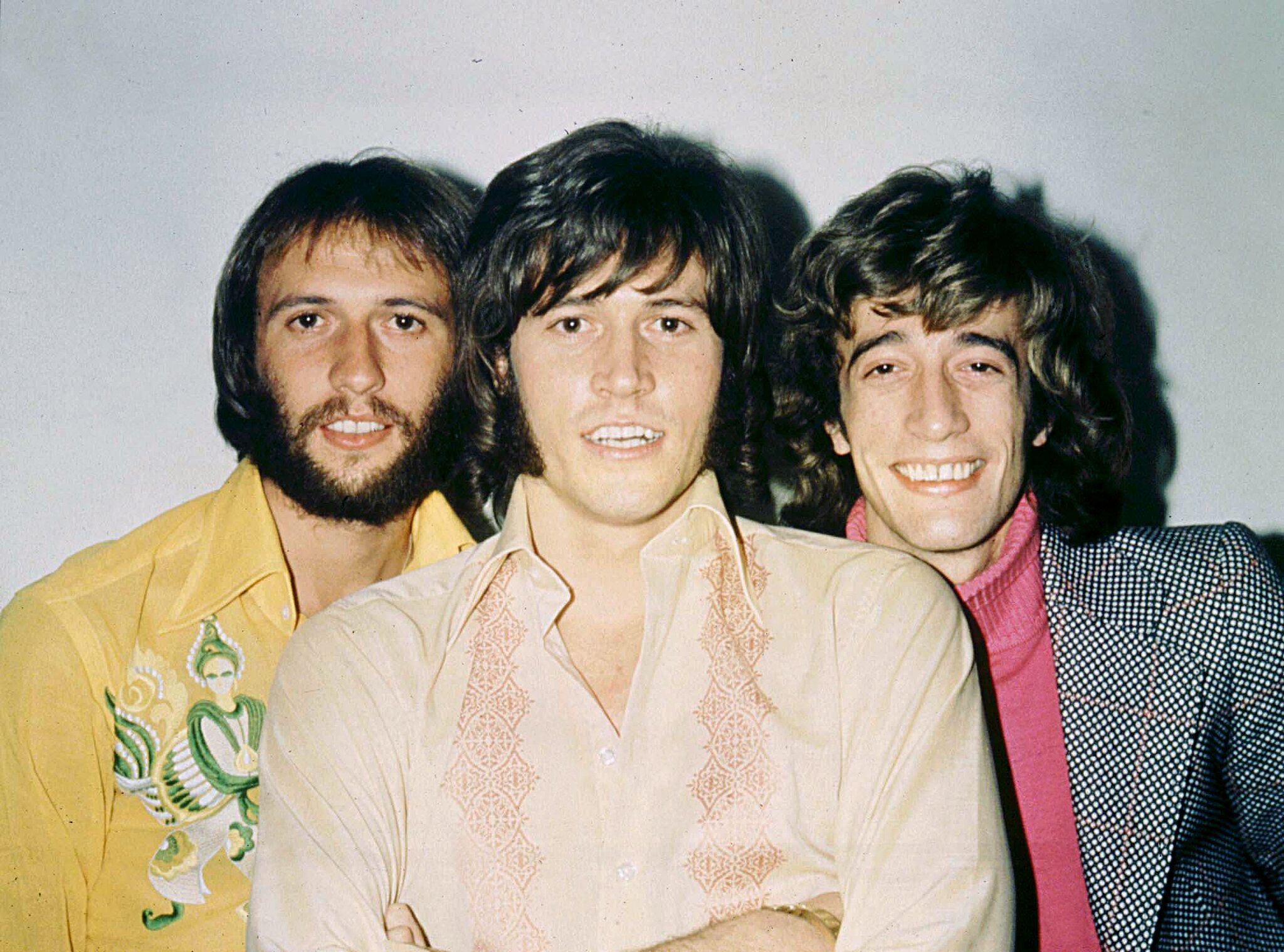
“Warm Ride” is the sound of motion, invitation, and midnight glow—an overlooked Bee Gees song that carries the elegance and pulse of their late-1970s peak without ever becoming one of its headline hits.
Written by Barry Gibb, Robin Gibb, and Maurice Gibb, “Warm Ride” comes from one of the most astonishing creative stretches in modern pop music. By the late 1970s, the Bee Gees were not simply successful; they were shaping the emotional and rhythmic vocabulary of the era. That is what makes this song so fascinating. It sounds like it belongs beside the giants of that period, yet the Bee Gees‘ own version did not arrive as a major standalone hit single in the way “How Deep Is Your Love”, “Stayin’ Alive”, or “Night Fever” did. Because of that, there is no big chart peak to place beside its name for the group’s original recording. And somehow, that only adds to its mystique.
The story behind “Warm Ride” is part of its allure. The song is closely tied to the brothers’ feverishly productive late-1970s period, when they were writing at a level that seemed almost effortless. Even material that did not become a signature Bee Gees single carried the polish, confidence, and melodic instinct that other artists would have gladly built entire careers around. “Warm Ride” later became known through other recordings as well, which says something important about the song itself: people recognized its strength immediately. The track had the bones of a hit, even if the Bee Gees‘ own version lived for years more as a prized discovery than as a radio staple.
Musically, the song feels inseparable from the sleek air of the late 1970s. There is propulsion in it, but not the kind that shouts. “Warm Ride” moves with style. The groove is supple, the rhythm glides, and the melody carries that unmistakable Bee Gees touch—smooth on the surface, carefully engineered underneath, and full of emotional suggestion. This was one of the group’s great gifts. They understood that dance music did not need to be emotionally empty, and that a song could feel luxurious without losing discipline. Even in a lesser-known track, that craft is everywhere.
What makes the song memorable is the tension between heat and ease. “Warm Ride” is not built like a confessional ballad, nor is it simply a floor-filler. It sits in a more intriguing space. The title itself suggests movement, closeness, temptation, and comfort all at once. That duality runs through the song’s atmosphere. It feels like nighttime with the windows down, a city glowing in the distance, a promise offered with just enough mystery to be irresistible. So much of the Bee Gees‘ best work from this era captured motion—emotional motion, romantic motion, literal physical motion—and here they do it with remarkable economy.
There is also a deeper lesson in hearing “Warm Ride” now. When people speak about the late-1970s Bee Gees, the conversation often narrows to the biggest titles and the biggest chart victories. Those triumphs deserve every bit of their reputation. But songs like “Warm Ride” remind us that the greatness of the group was never limited to the obvious landmarks. Their catalogue is rich because even the songs living just outside the center of the spotlight still bear their signature intelligence. The brothers knew how to write hooks, certainly, but they also knew how to create mood. They knew how to make rhythm feel elegant. They knew how to make pop sound expensive without becoming cold.
That is why the song carries such a strong afterglow. Listening to it now, one hears more than a period piece. One hears the Bee Gees in a mode they mastered: poised, stylish, emotionally alert, and fully in command of texture. It is easy to imagine “Warm Ride” slipping into the soundtrack of a memory—streetlights, satin shirts, dashboard reflections, the little thrill of going somewhere that matters simply because it is night and the music is right. The song does not need to announce itself loudly. Its charm lies in how naturally it creates a world.
The brothers’ chemistry is part of that world as well. By this stage, Barry, Robin, and Maurice Gibb had become masters of vocal identity. Even when a track leaned into groove, there was still that unmistakable family blend behind it, a shared musical instinct that gave the Bee Gees their rare unity. “Warm Ride” may not be the first title named in a casual conversation, but it reveals how deep their artistry ran. This was a group whose so-called secondary songs could still carry atmosphere, sophistication, and melodic seduction in abundance.
In the end, the beauty of “Warm Ride” may be that it never hardened into overfamiliarity. Because it was not overplayed into permanence, it still retains the thrill of discovery. It feels like finding a polished gem in a drawer you thought you knew by heart. For longtime listeners, it opens a side door back into the world of the late-1970s Bee Gees—a world of velvet rhythms, luminous arrangements, and songs that made the night feel larger than life. And for anyone arriving fresh, it offers a simple reminder: when the Bee Gees were at their peak, even their less celebrated work could glow with the confidence of a classic.
“Warm Ride” may not carry a famous chart number beside the Bee Gees‘ own recording, but it carries something that lasts longer than statistics: atmosphere, finesse, and the unmistakable sensation of a great band leaving beauty in its wake, even off the main road.