
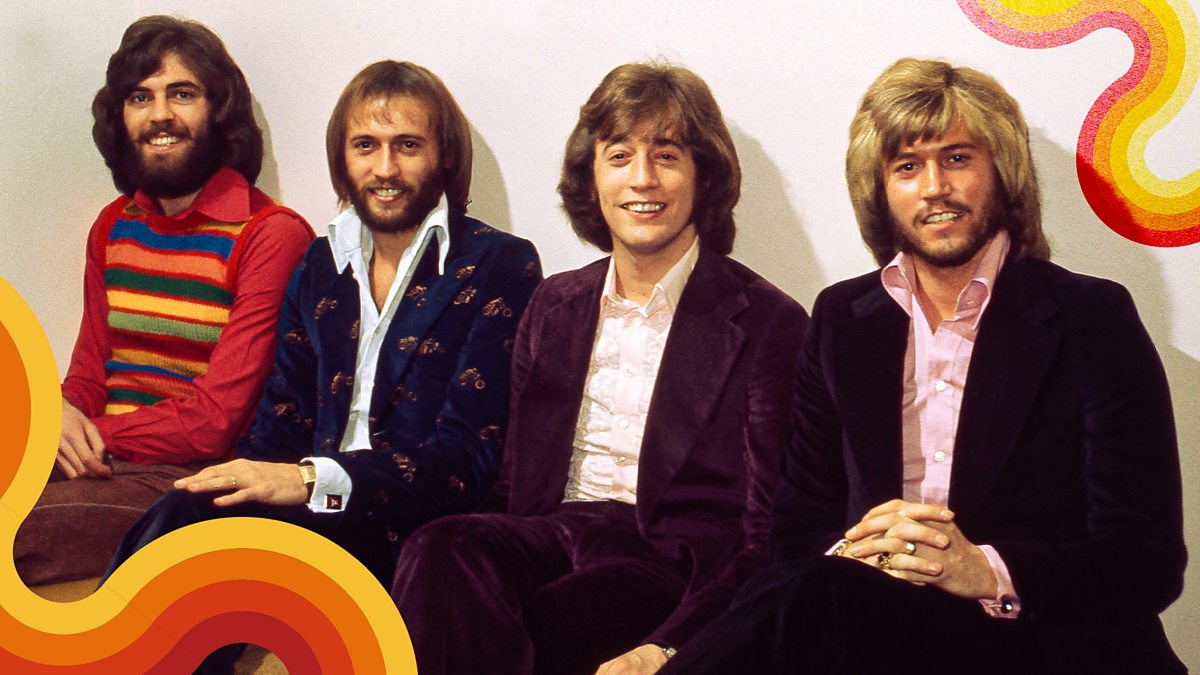
“Lonely Days” captured the Bee Gees at a fragile, miraculous crossroads—turning reunion, longing, and brotherhood into a record that still glows with the ache and grandeur of the early 1970s.
There is a special kind of emotion in “Lonely Days” that feels larger than ordinary heartbreak. It is not simply a love song, though it certainly aches like one. It sounds, rather, like a song born from absence itself—from separation, from distance, from the strange emptiness that follows when something once whole has been broken apart and is trying, carefully, almost fearfully, to become whole again. That may be why the record still lands with such force. When the Bee Gees sang “Lonely Days” in late 1970, they were not merely delivering another polished pop single. They were singing from the edge of reunion, and somehow that private history seeped into every rise and fall of the song.
By the time it was released on November 6, 1970, the group had already been through one of the earliest fractures of their career. Robin Gibb had left after the tensions surrounding Odessa, and for a while the idea of the three brothers returning as a fully functioning unit no longer felt guaranteed. That is what gives “Lonely Days” its emotional shadow. It arrived as the first single from 2 Years On, the album that marked Robin’s return to the fold. In other words, this was not just a hit record. It was the sound of the brothers finding one another again. The album went on to reach No. 32 on the Billboard 200, while the single climbed to No. 3 on the Billboard Hot 100 and No. 33 in the UK—a stronger commercial showing in America than at home, and an early sign that the Bee Gees’ next great chapter would be written largely across the Atlantic.
What makes the song so unforgettable, though, is not the chart history alone. It is the way the record moves. “Lonely Days” begins with a kind of inward ache, then opens outward into one of those soaring, almost hymn-like choruses that the Bee Gees could do better than almost anyone. There is tenderness in it, yes, but also urgency. The verses feel intimate, confessional, nearly bruised; the chorus suddenly expands until it seems to fill the whole room. That emotional architecture is part of the magic. The song does not stay still inside loneliness. It struggles against it. It reaches upward, as if hoping harmony itself might be enough to keep sorrow from closing in.
And perhaps that is why it feels so deeply like a Bee Gees record in the richest sense. The brothers had always understood that sadness could be made beautiful without being softened. They knew how to make melancholy sound elegant, and how to turn vulnerability into something symphonic. On “Lonely Days,” all three voices matter—not only because they are technically superb, but because their blend carries emotional meaning of its own. This is a song about loneliness, sung by brothers whose sound depended on togetherness. That contrast gives the performance an extra ache. Even when they are singing of isolation, they are doing it in union.
The story behind the writing only deepens that feeling. Accounts connected to the group say “Lonely Days” was created at or around the brothers’ first reunion session in London, with Robin later recalling that it was written in the basement of Barry’s place on Addison Road. Barry also said the song came quickly—within about ten minutes at the piano. That kind of speed is always fascinating, because songs written in a flash often carry something instinctive and unguarded. They do not feel assembled; they feel discovered. And “Lonely Days” has exactly that quality. It sounds less like a composition being carefully manufactured than like a feeling suddenly breaking the surface.
There is another reason the song remains so powerful: it sits in that very brief, luminous stretch before the Bee Gees would score their first U.S. No. 1 with “How Can You Mend a Broken Heart.” So “Lonely Days” now feels like both a return and a warning, both a healing and a premonition. It announced that the brothers were back, but it also showed just how naturally they could transform emotional fracture into pop drama. In the United States, the single became their first Top Five hit there, and even reached No. 1 on Cash Box and Record World, confirming that the comeback was not merely sentimental—it was real, commercial, undeniable.
Even the record’s reception at the time hints at why it endured. Contemporary trade reviews noticed how the song built atmosphere before bursting into its bigger refrain. That observation still feels right. “Lonely Days” does not rush to its emotional climax; it earns it. It understands that longing grows in waves, that the heart often circles its pain before admitting how large it has become. The record honors that rhythm beautifully.
Listening now, what lingers most is not simply nostalgia, though the song carries that in abundance. It is the sense of human nearness inside it. So much of early-1970s pop could feel grand without losing warmth, and “Lonely Days” is one of the finest examples of that balance. It has orchestral sweep, rich harmonies, a memorable hook, and yet at its center is something disarmingly plain: the loneliness of wanting love, wanting connection, wanting the missing part of life to return. That emotional simplicity is what keeps the song timeless.
In the end, “Lonely Days” still hits because it carries more than one sorrow at once. It is about romantic longing on the surface, but underneath it is also about reunion, about mended bonds, about the fragile miracle of voices finding each other again after silence. That is why the song still feels touched by something almost magical. Not polished magic. Not manufactured magic. Something warmer, sadder, and more human than that. The kind that only happens when great singers do not just perform a feeling—they have lived close enough to it to let it tremble in the music. And in “Lonely Days,” the Bee Gees did exactly that.