
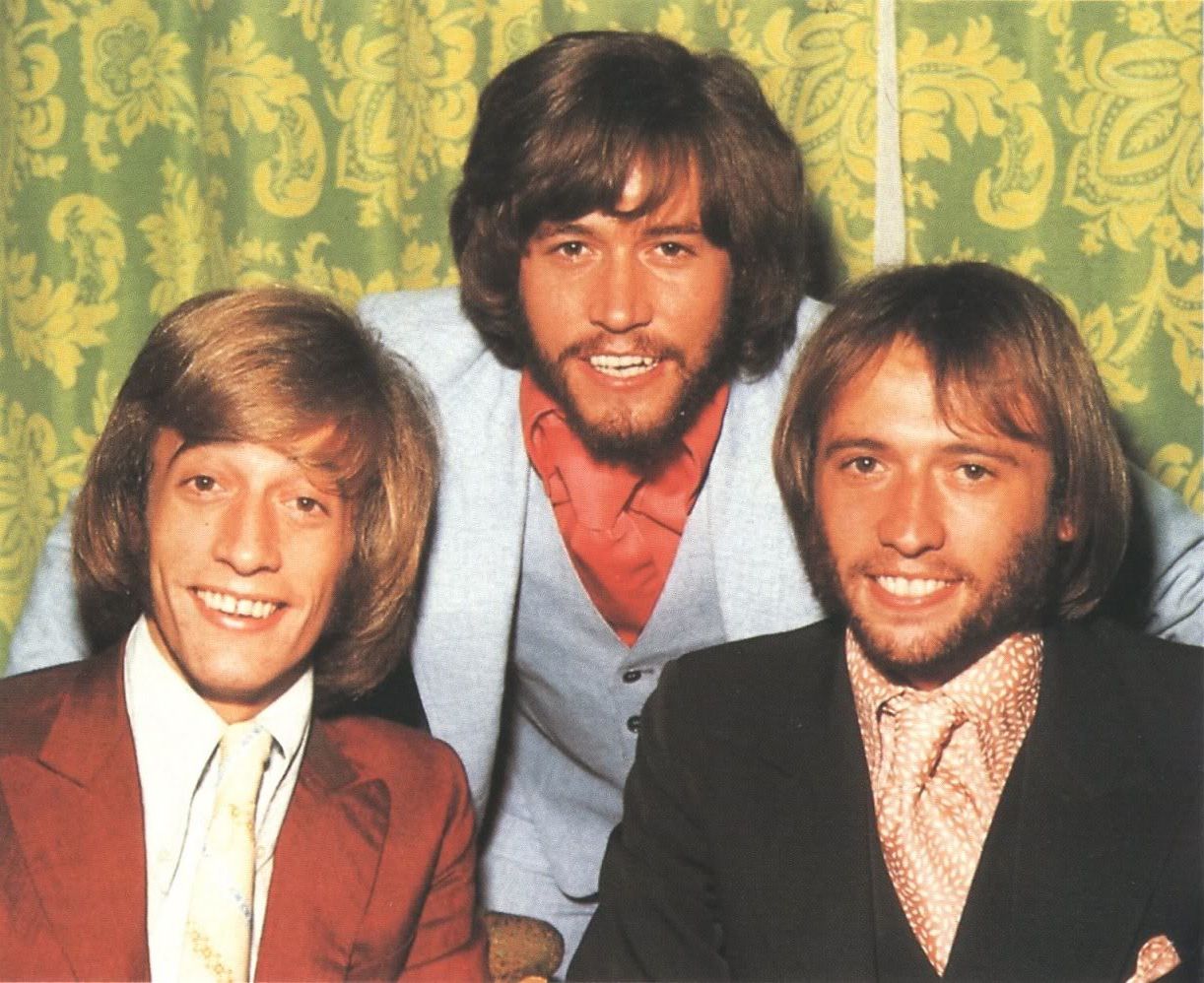
In “(Our Love) Don’t Throw It All Away,” the Bee Gees turn a plea into something almost unbearable—love standing at the edge of ruin, still reaching forward, still hoping the hand it once held has not fully let go.
There are songs built on heartbreak, and there are songs built on that even more fragile moment just before heartbreak becomes final. “(Our Love) Don’t Throw It All Away” lives in that second place, and that is why it still cuts so deeply. It is not a song of aftermath. It is a song of appeal. A song of one last effort before the door closes. The Bee Gees’ version was first recorded in 1977 during the period around the Saturday Night Fever sessions, but it was not released right away; it finally appeared in 1979 on the compilation Bee Gees Greatest. By then, the group stood at an extraordinary commercial height, with Spirits Having Flown reaching No. 1 in both the UK and the US that same year. Yet this song does not sound triumphant. It sounds stripped of confidence, almost defenseless, and that contrast is part of its enduring power.
The first precious detail behind the song is that it was written by Barry Gibb and Blue Weaver, with Barry writing the lyrics and Weaver shaping the melody. Weaver later recalled that the song was not originally created with some grand master plan in mind; it came from the kind of exploratory songwriting that often produces the most lasting emotion almost by accident. That matters because “(Our Love) Don’t Throw It All Away” does not feel engineered. It feels discovered. Its sadness is not ornate. It moves with the plainspoken ache of someone who can already sense love slipping out of reach and has only one argument left: please, not yet.
The second detail is the one that gives the song an even more tender shadow. Before the Bee Gees released their own version, Andy Gibb recorded it and took it into the American Top 10, where it reached No. 9 on the Billboard Hot 100 and No. 2 on the Adult Contemporary chart in 1978. In preparing Andy’s version, Barry Gibb returned to the song and added a middle section because he felt it still was not complete. That small story says so much. This was not a tossed-off ballad. It was a song Barry kept listening to, kept refining, as though he knew there was something emotionally unfinished in it that had to be honored properly. Years later, after Andy Gibb’s death, the Bee Gees performed the song on their One Night Only tour with Andy’s original lead vocal woven into parts of the performance—a gesture that turned an already sorrowful plea into something even more haunted.
And perhaps that is one reason the song still breaks hearts decades later: it carries more than one kind of loss inside it.
On the surface, the lyric is simple. Someone sees love fading and asks, almost with disbelief, that it not be abandoned so easily. But the emotional force lies in how little the song tries to decorate that feeling. There is no revenge in it. No proud mask. No performance of indifference. The speaker is vulnerable from the very beginning. That kind of openness is harder to sing than dramatic despair. It leaves nowhere to hide. The plea in the title is direct, but it is also quietly humiliating in the most human way. To ask someone not to throw love away is to admit they may already be halfway out the door.
That is what makes the song feel painfully close even now. So many breakup songs are written after the heart has had time to harden into clarity. “(Our Love) Don’t Throw It All Away” comes earlier than that. It lives in the helpless interval when feeling is still alive enough to fight for itself. The damage is not yet complete, and that makes the sorrow sharper. We are hearing not memory, but emotional emergency.
In the Bee Gees’ hands, that emergency is made all the more moving by restraint. The arrangement is soft, almost floating, and the vocal approach resists melodrama. Instead of pushing the pain outward, the song lets it gather inward. That choice gives the performance its ache. The group had already mastered grand pop drama by this period, yet here they show how devastating gentleness can be. The song does not need to shout. It trembles. And trembling, in music like this, can be more powerful than collapse.
There is also something quietly revealing about where the song sits in their catalogue. The late 1970s are so often remembered through the bright pulse of disco, through Saturday Night Fever, through rhythm, flash, and immaculate pop command. But “(Our Love) Don’t Throw It All Away” reminds us that the Bee Gees were never only craftsmen of momentum. They were also masters of romantic vulnerability, able to make pleading sound elegant, wounded, and terribly sincere. The song’s survival proves that point. It has outlasted fashion because the feeling at its center is older than style.
So yes, one plea, one last chance—that is exactly the soul of it. The song still breaks hearts because it understands that love does not always end with anger. Sometimes it ends with one final reaching-out, one last trembling request, one last refusal to believe the best part of life can be set down so carelessly. In “(Our Love) Don’t Throw It All Away,” the Bee Gees captured that moment with uncommon tenderness. And once you have heard that plea clearly, it stays with you—like a voice still calling from the doorway, hoping it is not already too late.