
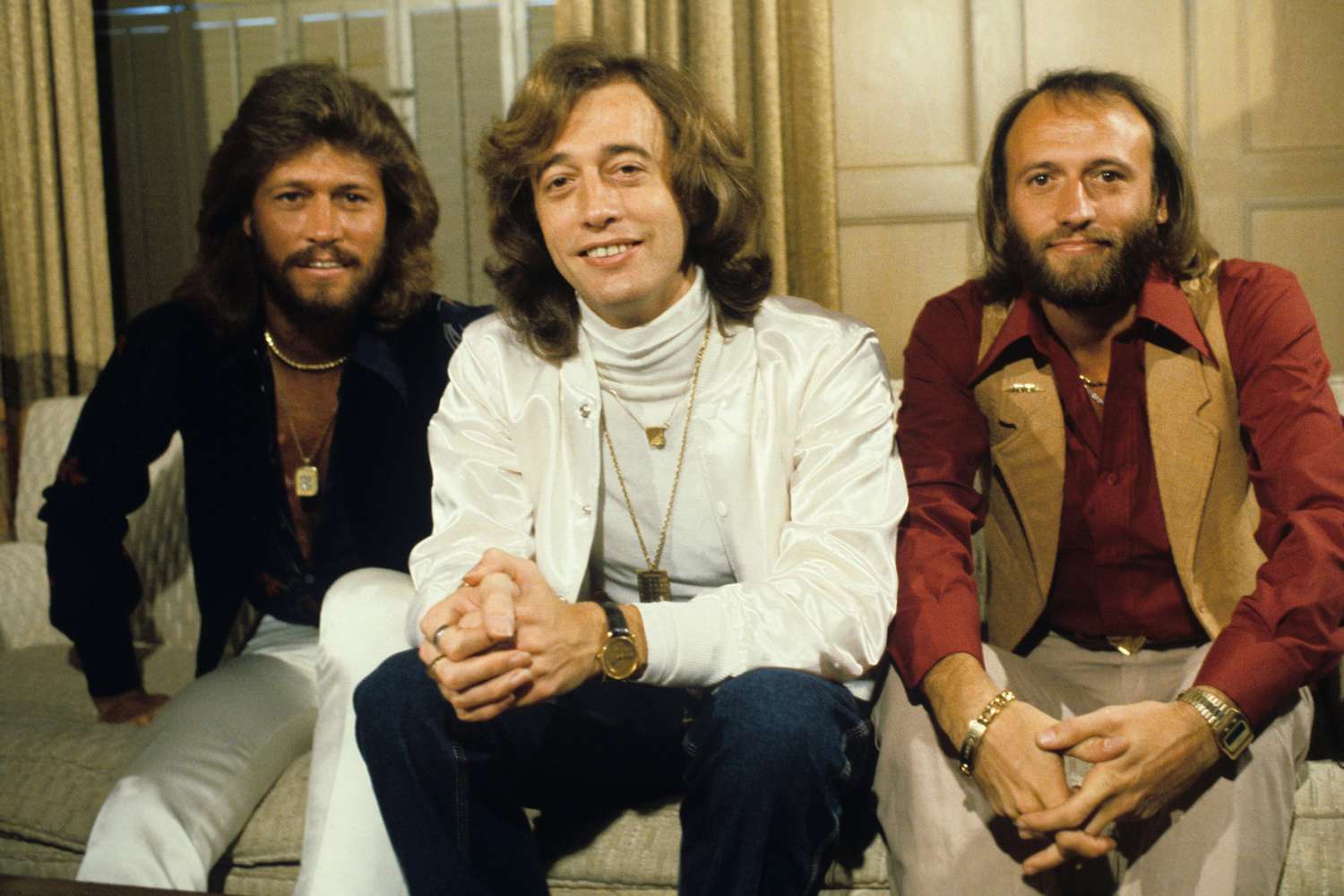
The Bee Gees’ “Grease” captured the pulse of 1978 by blending disco swagger, movie magic, and Barry Gibb’s unmistakable melodic instinct into a song that helped define an era.
There is something wonderfully ironic about “Grease”: many listeners connect it instantly to the film, the white-hot summer of 1978, and Frankie Valli’s sleek vocal performance, yet at its creative heart stood Barry Gibb of the Bee Gees. That alone gives the song its special place in pop history. It was not just another soundtrack number. It was a moment when one musical empire quietly reached over and gave another cultural phenomenon its opening spark.
Released in 1978 as the title song for the film Grease, the single became a major hit, reaching No. 1 on the Billboard Hot 100 in the United States and No. 3 on the UK Singles Chart. Those chart positions tell only part of the story. What truly made the song unforgettable was the way it seemed to bottle the excitement of the late 1970s: glossy, rhythmic, confident, and just a little bit nostalgic. It introduced the movie with a sound that felt modern for its day, even though the film itself lovingly looked back to the 1950s.
The backstory is part of what makes “Grease” so fascinating. Producer Robert Stigwood, who had been deeply involved with both the Bee Gees and the Grease film project, asked Barry Gibb to write the title track. By that point, the Bee Gees were at an astonishing creative peak. The world had already heard what they could do with melody, harmony, and modern rhythm, especially through the cultural tidal wave of Saturday Night Fever. Barry wrote “Grease” quickly, drawing on the sleek, dance-infused style that had become inseparable from the Bee Gees’ late-1970s identity.
And yet the song was not released as a Bee Gees single in its best-known form. Instead, it was handed to Frankie Valli, whose voice gave it a bright, agile, unmistakably American pop character. That decision was inspired. Valli carried the memory of an earlier era, while Barry Gibb’s writing carried the energy of the present. Together, those two sensibilities gave “Grease” its rare balance: it sounded contemporary, but it also felt tied to the past in a way that matched the film’s spirit beautifully.
For longtime admirers of the Bee Gees, this song offers a reminder that their influence extended far beyond the records released under their own name. Barry Gibb did not simply write a catchy theme; he wrote a song that framed an entire movie before a line of dialogue had even been spoken. From its first beat, “Grease” announces style, movement, youth, and reinvention. It is the kind of opening that tells an audience, almost instantly, that they are stepping into a world where memory and fantasy will dance together.
Lyrically, the song is more about attitude than plot, and that is precisely why it works. It celebrates image, confidence, and transformation—central ideas in the film itself. The repeated invocation of “grease” is not just a title hook; it becomes a symbol for coolness, belonging, and the electric theater of adolescence. In that sense, the song is less a narrative and more an invitation. It welcomes listeners into a mythic version of youth, the kind remembered not with documentary realism, but with music, color, and feeling.
Musically, the Bee Gees’ fingerprints are impossible to miss. The rhythm glides with disco polish, the melody is sharp and immediate, and the phrasing has that buoyant late-1970s pop finesse Barry Gibb mastered so completely. Even listeners who do not know the writing credit often sense that “Grease” belongs to the same cultural weather system that produced so much of the Bee Gees’ era-defining work. It has the same gift for making sophistication sound effortless.
What still gives the song its staying power is the way it sits at the crossroads of several memories at once. It belongs to the story of Grease, to the chart history of Frankie Valli, and to the songwriting legacy of the Bee Gees. Few songs can claim such a wide emotional reach. It is a soundtrack staple, a radio time capsule, and a quiet testament to Barry Gibb’s instinct for writing music that could live everywhere at once—on screen, on the airwaves, and deep inside popular memory.
If one listens closely now, years later, “Grease” still feels like more than an opening number. It feels like a threshold. The first notes carry the shimmer of a time when pop music could be glamorous without losing its heart, when movie songs mattered, and when the right writer could shape an era from behind the scenes. That is why the Bee Gees’ connection to “Grease” remains so compelling. It is the story of a song they gave away, only for it to become one of the most recognizable musical signatures of 1978.