
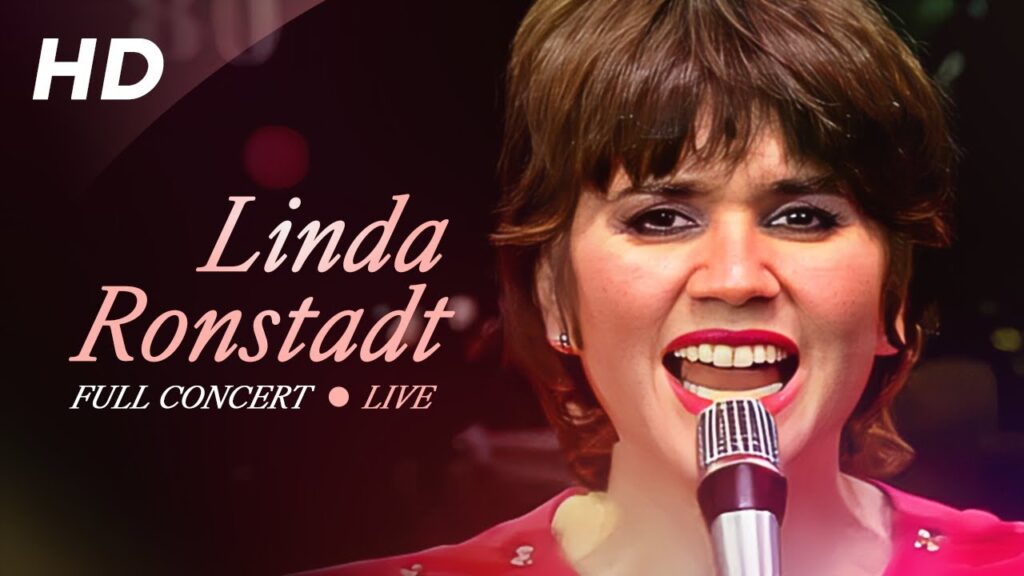
“Back in the U.S.A.” (Live, 4/24/1980) is pure homecoming electricity—Linda Ronstadt grabbing Chuck Berry’s anthem and turning it into a bright, restless celebration of everyday America.
Here are the most important anchors first. “Back in the U.S.A.” was written and first released by Chuck Berry in 1959, and his original single reached No. 37 on the Billboard Hot 100 (and No. 16 on the R&B chart). Linda Ronstadt later scored a major hit with her studio cover in 1978, issued as a single from Living in the USA—peaking at No. 16 on the Billboard Hot 100 (and No. 11 on Cash Box). The performance you named—“Back in the U.S.A. (Live at Television Center Studios, Hollywood, CA, 4/24/1980)”—comes from a concert filmed on April 24, 1980 at Television Center Studios in Hollywood, originally recorded for an HBO special, and later released officially in 2019 on the live album Live in Hollywood.
Now, the feeling.
There are songs that wave a flag, and there are songs that smell like the inside of a diner at night—grill still hot, neon still buzzing, jukebox still daring you to put in one more coin. Chuck Berry didn’t write “Back in the U.S.A.” like a speech; he wrote it like a grin you can hear. Hamburgers, jukeboxes, the sheer physical pleasure of being back among familiar streets and familiar noise—this is patriotism without polish, the kind that lives in ordinary appetite.
When Linda Ronstadt sings it live in 1980, that grin changes shape. It becomes something bigger than nostalgia and sharper than cheerleading. By that point, she wasn’t just a star—she was a force who could step into almost any American vernacular (country ache, rock swagger, pop sweetness) and make it sound like her own heartbeat. So on that Television Center Studios stage—captured for television, with the cameras close enough to notice every quick inhale—she doesn’t “cover” Berry so much as re-ignite him.
There’s a special tension in this particular recording because the setting is both intimate and public at once. A studio taping is not a stadium; it doesn’t let you hide behind distance. Yet it still carries that “performance” pressure—lights, cues, the knowledge that the moment will be replayed by strangers. That’s where Ronstadt shines: she sings like she’s speaking to the room, but she projects like she’s singing to the country. “Back in the U.S.A.” becomes less a postcard and more a pulse—America not as an idea, but as motion: traffic, laughter, late-night hunger, and a music scene that never stops borrowing from itself.
And because Ronstadt’s own 1978 single was already a proven hit—Billboard Hot 100 No. 16—the song arrives in 1980 with a bit of lived-in authority. She’s not trying it on to see if it fits; she’s wearing it like a well-loved jacket. You can hear the confidence of a singer who understands what makes the lyric work: the way Berry’s words celebrate pleasure without apology, the way the rhythm insists that joy is a serious business.
The deeper meaning of this performance—especially heard now, decades later—is how it preserves a particular American emotional vocabulary that’s easy to forget. Not the loud kind. The everyday kind: the comfort of the familiar, the relief of coming home, the small luxuries that don’t make headlines but make life feel real. That’s what Live in Hollywood ultimately offers: a time capsule of Linda Ronstadt at full command, caught on a night in April 1980 when rock ’n’ roll still felt like a shared language, and “home” could be sung in three minutes with a smile you could practically see.