
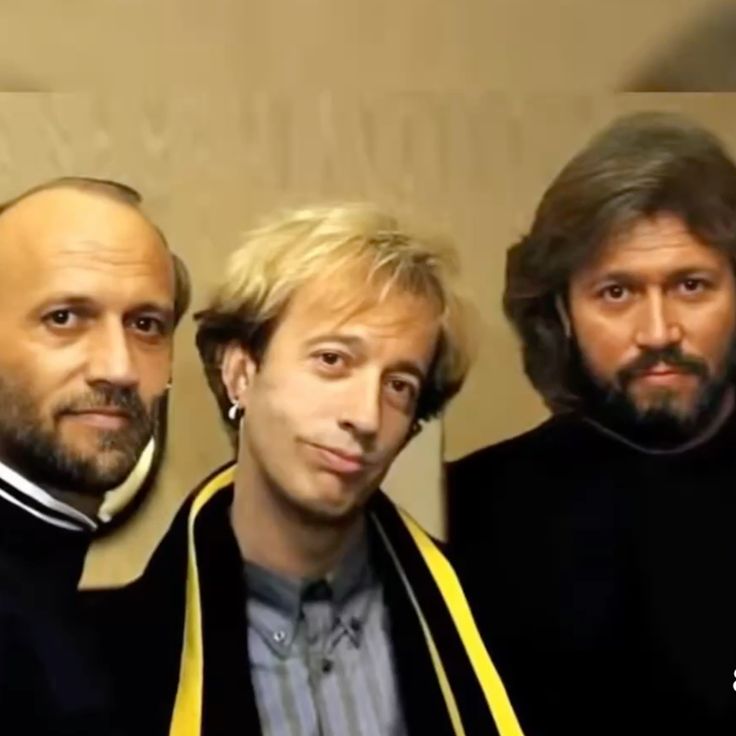
In My Own Time captures the Bee Gees in a softer, more inward mood, where time is measured not by fame or fashion, but by feeling, memory, and the private pace of the heart.
There are songs that announce themselves in a room, and then there are songs that seem to wait for the room to grow quiet. In My Own Time belongs to that second kind. It is one of those lesser-known Bee Gees recordings that reminds us how much of their greatness lived far away from the bright glare of hit-parade mythology. For listeners who know the brothers mainly through the immense shadow of their global singles, this song opens another door entirely. It brings us back to the deeply melodic, reflective, emotionally literate side of Barry Gibb, Robin Gibb, and Maurice Gibb—three brothers who could make vulnerability sound elegant.
One important fact should be placed near the beginning: unlike the Bee Gees’ biggest signature songs, In My Own Time was not a major chart single in the way titles such as Massachusetts, How Can You Mend a Broken Heart, or Stayin’ Alive were. It did not become a headline chart story on the Billboard Hot 100 or the UK Singles Chart, and that relative absence from chart history is part of what gives it such a special afterlife. Some songs win the week they are released. Others wait patiently for the years to reveal their worth. This is one of those songs.
What makes In My Own Time so moving is the title itself. The phrase carries a quiet defiance, but not the loud kind. It does not sound rebellious for the sake of display. It sounds personal. It sounds like someone trying to hold onto an inner rhythm while the world keeps insisting on another pace. That feeling has always lived inside the best Bee Gees music. Even in their most polished recordings, there was often a current of loneliness, self-questioning, and emotional distance just beneath the surface. Here, that quality feels especially exposed. The song seems to speak to anyone who has ever felt out of step with the times around them, yet refused to surrender their truest self.
That is one of the most beautiful things about the Bee Gees as songwriters. They understood that sadness is not always dramatic. Sometimes it is measured, thoughtful, almost whispered. Sometimes the ache in a song comes not from heartbreak alone, but from waiting—waiting to be understood, waiting for life to make sense, waiting for the right season of the soul. In My Own Time carries that kind of emotional weather. It does not rush toward a grand statement. Instead, it lives in the reflective territory the brothers knew so well, where melody becomes confession and harmony becomes shelter.
For many admirers, the hidden story behind songs like this is also the hidden story of the Bee Gees themselves. They were far more than a single era, far more than a single sound, and far more than the shorthand history sometimes given to them. Long before later reinventions brought them new audiences, the brothers had already built an extraordinary body of work rooted in craft, sensitivity, and melodic grace. A song like In My Own Time matters because it helps restore that fuller picture. It reminds us that the Bee Gees could be intimate without becoming small, and poetic without losing clarity.
The meaning of the song feels timeless because its emotional center is timeless. To live in one’s own time is not merely to go slowly. It is to resist being hurried into someone else’s version of life. It is to let memory ripen. It is to trust that understanding does not always arrive when the world expects it to. Heard that way, the song becomes more than a period piece or collector’s favorite. It becomes a statement of inner dignity. That is why lesser-known songs often stay with us so strongly. They do not come wrapped in overfamiliarity. They come to us almost privately, and once they do, they feel like they belong to us in a different way.
There is also something unmistakably poignant in hearing the Bee Gees through this lens now. With the passing decades, their gentler recordings often feel even richer than they once did. The harmonies seem to carry more memory. The phrasing seems to hold more life in it. What may once have sounded like a deep album cut or an overlooked composition can now feel like a quiet document of who they really were when the noise was stripped away. In My Own Time is not a song built on spectacle. It survives on atmosphere, honesty, and emotional intelligence. That is exactly why it endures.
In the end, the song’s lasting power comes from something the Bee Gees understood better than most: the human heart does not move in straight lines. It circles back. It hesitates. It remembers. It asks old questions in a new voice. In My Own Time may not carry the chart statistics of the group’s most famous releases, but it carries something just as precious—a sense of private truth. And sometimes that is the song we return to most faithfully, the one that speaks not to the crowd, but to the solitary part of us still listening carefully in the quiet.